
Customer satisfaction research is an essential technique for understanding the public's perception of a company and for developing strategies for improvements and adjustments.
Even though employees and entrepreneurs are always aware of their problems and know what needs improvement, there's no one better to point out mistakes and successes than consumers, right?
External opinion makes all the difference and should be considered by companies, after all, it is very valuable and generates great insights.
How have you been handling your customer satisfaction research? Have you implemented any in your company and actually used its results?
Check out our post and learn more about the topic!
What is customer satisfaction research?
Customer satisfaction research is a strategy whose main function is to receive feedback from customers. This feedback can be translated into business opportunities.
Conducting satisfaction surveys allows the company to learn more about the user and their perceptions, expectations, and experiences with the products or services.
There are various types of research that can be applied, but regardless of the style chosen, they all share common characteristics: the objective, the hypotheses, and the sample.
Setting a goal is the first step in conducting research; after all, without knowing what you want to find, it's difficult to formulate questions and choose channels, isn't it?
Next, it's necessary to define the hypotheses. These relate to what impressions and results you think you will find at the end of the research. They will help during the analysis and even in defining the questions.
Finally, after understanding the objective and what is being sought, it is necessary to define who the research will be directed towards and calculate representative samples.
What are the benefits of customer satisfaction research?
Customer satisfaction research can be conducted with both external and internal audiences, as both are very valuable to organizations.
By focusing on the external audience, consumer habits are realistically mapped. Internally, managers can measure the satisfaction of those who apply the company's values and are in continuous contact with its products or services.
Regardless of which audience you choose, customer satisfaction research guarantees several benefits. We've highlighted a few for you below! Check it out!
It helps to learn more about customers
Working with the customer journey and customer experience is the strategy of the moment, which is why it's always necessary to learn more about the audience.
Through research, it's possible to direct questions and learn even more details about your personas. There are many possibilities for discovery, and certainly, each piece of information is very valuable for future actions.
It highlights opportunities and areas for improvement
Discovering information directly from customers is a major competitive advantage for businesses. After all, with this data, entrepreneurs can base their decisions on and create investment strategies that are truly worthwhile.
More than that, it's possible to identify and understand what needs to be addressed more quickly, what opportunities need to be seized, and what improvements should be made to the business.
We can also mention competitive analysis, which should be done to measure the strengths and weaknesses of competitors.
Having data allows companies to set aside guesswork and make strategic decisions with more confidence.
Greater customer retention
There's nothing worse than a dissatisfied customer, who can become a detractor of your brand. Negative marketing and opinions reach far more people than satisfied consumers and can have negative consequences.
Therefore, the sooner you listen to the customer, the greater the chance of discovering their shortcomings, recovering old customers, and setting out to win over new ones.
Integrating technology into customer satisfaction research: how to obtain more accurate feedback
Technology plays a fundamental role in customer satisfaction research, as it allows companies to collect data more quickly, easily, and accurately. Furthermore, technology offers features that enable companies to segment customers, personalize surveys, and track results in real time, such as:
- Agility: Technology allows companies to collect data more quickly, which is essential for identifying problems and opportunities for improvement in a timely manner.
- Accuracy: technology helps ensure the accuracy of the data collected, which is fundamental for making more informed decisions.
- Segmentation: technology allows companies to segment customers, which is essential for collecting more relevant feedback.
- Personalization: technology allows companies to customize surveys, which increases response rates and customer satisfaction.
- Real-time monitoring: technology allows companies to track research results in real time, making it easier to identify trends and take corrective action.
To use technology effectively in customer satisfaction research, companies should consider the following factors:
- Research objectives: Before starting the research, it is important to define the objectives you wish to achieve. This will help you choose the most appropriate channels and questions.
- Data collection channels: technology offers various channels for data collection, such as email, SMS, social media, chatbots, and apps. The choice of channel should be made according to the target audience and the research objectives.
- Questions: Questions should be clear, objective, and relevant to the research objectives. It is important to avoid overly long or complex questions, as they may discourage customers from responding.
- Data analysis: the collected data should be carefully analyzed to identify strengths and opportunities for improvement.
How do you get customer feedback ?
Customer satisfaction research gathers feedback , and this feedback can be obtained in various ways. It's not necessary to choose just one strategy; the key is to combine multiple channels and reach users in diverse ways.
Post-sales forms
The end of the purchase process is a great time to get feedback ; after all, they will be in the heat of the moment, with complaints and compliments ready to be made.
At this point, it's important to try to find out what motivated them to buy, how they found your company, what their experience was like during the service and the sale, among other information.
CRM
CRMs are platforms that gather customer information and help salespeople and employees understand exactly each customer's journey, offering solutions and anticipating their needs.
Having this type of database helps in collecting and storing data, also providing information about user satisfaction or dissatisfaction.
Even if indirectly, and not exactly working like a large-scale research project, CRMs help to offer insights and provide views on habits and preferences, which can become feedback.
Customer satisfaction survey
The actual satisfaction survey, which is the most direct method, is where the company asks what it really wants to know.
It's necessary to develop objective, relevant questionnaires that don't take up too much of the users' time. Offering discounts, gifts, and rewards can be a good way to further encourage responses.
Emails and social networks
Using email and social media is a great way to grab attention and attract customers to your research. They allow you to personalize messages and reach specific audiences.
It's also worth collecting data on responses to posts, reactions, and interactions in these spaces. On social media, users offer a lot of feedback , which should also be considered.
NPS
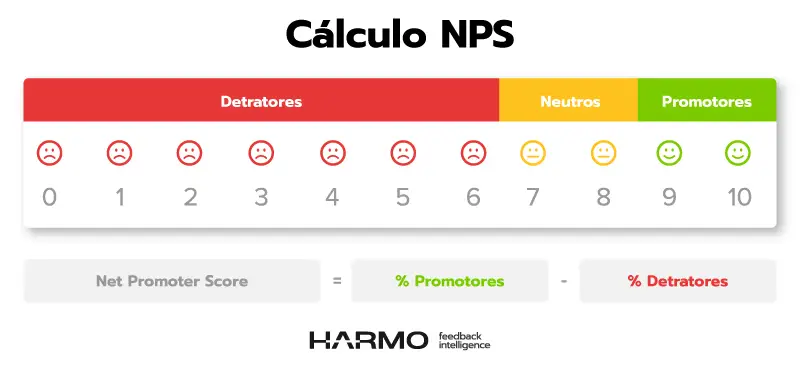
The NPS, or Net Promoter Score, can also be considered a form of customer satisfaction research.
The methodology consists of asking a single question, always related to recommending the company to other people.
Generally, on a scale of 0 to 10, one assesses how likely a customer is to recommend the company to a friend or colleague.
After this question, it's possible to move on to qualitative research, giving the client the chance to provide more details, although this is not mandatory.
NPS calculates detractors, those who gave between 0 and 6, neutrals, with ratings of 7 and 8, and promoters, with scores of 9 and 10.
Conclusion
Regardless of which strategy your company chooses for customer satisfaction research, it's important to remember that more than just collecting data, it's necessary to actually use it to improve and benefit customers.
Collect data, analyze and extract information, understand your customer profiles, and develop plans that enhance the customer experience, whether in contact channels, marketing, sales, logistics , or any other area of the company.
Always be aware of the chances of the customer recommending your brand, whether expectations were met or not, their perceptions, and the likelihood of repeat purchases through your channel.
Customer satisfaction surveys can provide different insights and many solutions in the short, medium, and long term. How have you been addressing this issue within your company? How important is customer opinion to you right now?
Now that you know a little more about customer satisfaction research, get your hands dirty and take the opportunity to learn more about customer relationship management and its importance. Until next time!