Understand the role of drive to store in omnichannel retail and how to combine online and offline strategies to bring more customers to physical stores.
From digital to the counter, with measurement in between.
Drive to store is the discipline that connects what happens in digital channels to what happens inside the physical store. The central question is simple to formulate and difficult to answer: how much of the investment made in digital presence, reputation, and search translates into people walking through the door?
The historical difficulty lies in attribution. In e-commerce, the path between advertisement and purchase is traceable from end to end. In physical retail, the customer researches on one device, decides at another time, and buys without identifying themselves. Therefore, the sector has started working with intermediate indicators, and the most relevant of these is the route request, the moment when someone maps the route to the establishment. It is the action closest to the visit that still leaves a digital trace. What you'll find here:
content drive to store on measuring online-to-offline traffic, visit attribution, reading route requests, and building indicators that link digital investment to store traffic. We also address the relationship between reputation and movement: the average rating of a unit has a direct effect on how many people choose to go there, and this effect can be calculated.
The topics of e-commerce and online sales are excluded, as they follow a different funnel logic and a different form of measurement. The focus here is on the physical operation, where conversion happens away from the screen, and the challenge is proving that it started there. How does Harmo fit into this?
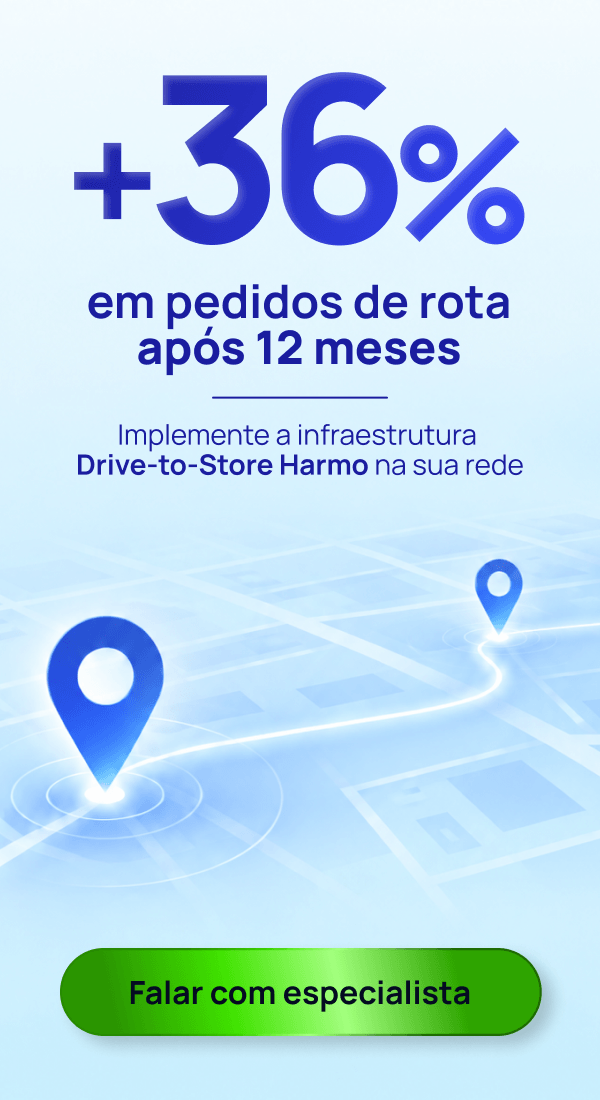
The Harmo Platform is Drive-to-Store: it connects digital presence, reviews, and research to transform reputation into measurable store traffic. Networks operating on the platform register an average of 36% more route orders after twelve months. If you need to link digital investment to traffic at the point of sale, talk to a specialist.
Harmo Newsletter
Get reputation scores for over 24,000 stores delivered to your email. Subscribe to our content.