
Customer relationship management is a business strategy for any company seeking to improve revenue and profitability, as well as reduce costs and increase customer loyalty.
Their philosophy is quite simple: put the customer first.
When implemented correctly, customer relationship management offers companies not only insight into business growth opportunities with each customer, but also a way to measure their value within the customer journey.
How do we define customer relationship management?
Customer relationship management (CRM)plays an essential role for companies that want to improve their revenue, increase customer loyalty, and enhance customer satisfaction throughout the journey.
In practice, CRM is more than just a tool; it's a set of customer relationship management strategies aimed at improving customer satisfaction and strengthening customer loyalty
This helps your company improve its profitability while promoting customer satisfaction and loyalty.
Generally, when we talk about CRM, people tend to associate it with a CRM system, which is a tool that helps manage contacts, sales, and workflows.
However, Customer Relationship Management allows you to focus on your organization's relationships with people – whether they are customers, service users, colleagues, or suppliers.
Furthermore, CRM isn't just for sales. Some of the biggest productivity gains come from going beyond using CRM as a sales and marketing tool, and also integrating the system into your business.
Why is CRM important for my business?
In the business world, retaining customers and expanding business is paramount. The costs associated with acquiring new customers mean that every customer is the heart of the business.
The more opportunities you give your customers to do business with your company, the better. And one way to achieve this is by opening channels such as direct sales, online sales, franchises, partnerships, etc.
However, the more channels you have, the greater the need to manage your interaction with your customer base, right?
Therefore, customer relationship management helps companies gain an overview of their customers' behavior and modify their business operations to ensure that customers are served in the best possible way.
In short, CRM helps a company recognize the value of its customers and capitalize on the best relationships with those consumers. After all, the better you understand your customers, the more effective your actions will be.

How does CRM work in practice?
Any business should start with a strong foundation of customer relationships, as you connect with people who need your product, and as your company grows, these business connections should evolve and become more sophisticated.
It's not just a transaction between buyer and seller; over time you begin to manage a myriad of connections within each company you do business with – and having all of that organized is fundamental for data-driven decision making.
You need to share information between various teams in your organization that are in contact with the same clients, so a CRM system serves as a vital strategy for managing the connections that occur in a growing business.
Although some people think CRM is just a technology, it's much more than that. No technology, however sophisticated, can be successful without a strategy to guide its implementation and use.
Business strategies and technology must work together to bring to life a customer-centric, which should be based on clear goals and a vision of what constitutes a meaningful customer experience.
Every time a customer interacts with an organization, through any of its channels, the customer has the opportunity to form an opinion – whether good, bad, or indifferent. And over time, this set of customer experiences will form an image in their mind, and thus, build the brand image and its values for the consumer.
Difference between CRM and CXM
To begin, we should look at a definition of each of them. Although many descriptions are available, we will analyze the current ones cited by Gartner:
Customer Experience Management (CXM): "It is the practice of designing and responding to customer interactions to meet or exceed their expectations, thereby increasing customer satisfaction, loyalty, and advocacy."
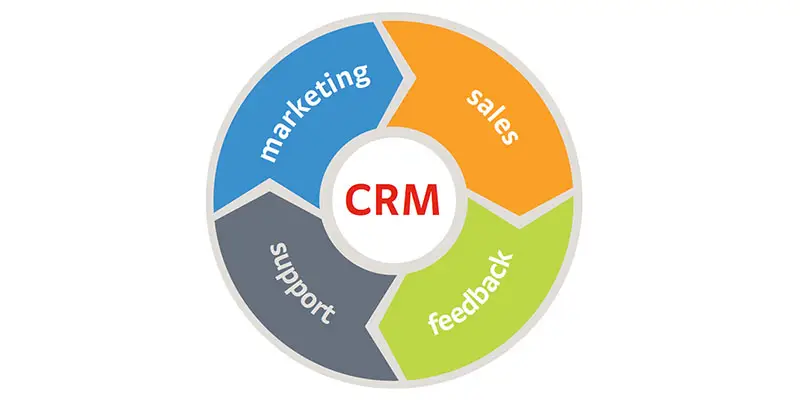
Customer Relationship Management (CRM): “It is a business strategy that optimizes revenue and profitability while promoting customer satisfaction and loyalty. In this scenario, CRM technologies identify and manage relationships with customers, whether in person or virtually. Furthermore, CRM software provides functionality for companies in four segments: sales, marketing, customer service , and e-commerce.”
After reading both definitions, you might think they “sound” very similar, but there are very subtle differences.
CXM recognizes that, in recent years, there has been a fundamental shift in the roles of seller and buyer, and organizations that supply or sell goods and services now need to keep the customer at the center of everything they doin order to gain a competitive advantage.
While CRM focuses on managing customer data and structuring business relationships, Customer Experience Management (CXM) focuses on creating a more qualitative customer experience.

So, where does CXM add value to my company?
Customer experience management shifts the focus from using software tools to managing customers and the team that serves them. It is designed for the application of technology in a customer-centric strategy that will provide relevant and superior service, with the goal of gaining a competitive advantage .
A CXM solution shifts the focus from data management to applying customer information at the right time and place, so it can be used to deliver consistently better customer experiences . In short, experiences that delight customers .
CXM is more qualitative than quantitative, and it also has the ability to make CRM information actionable, with a much stronger focus on customer outcomes.
CRM systems have struggled to make customer data actionable, at the moment when it can be applied to benefit a customer interaction.
CXM, on the other hand, completes the information journey for a positive customer experience with measurable benefits.
It's important to remember that a good CXM should provide a great experience through any channel or device the customer chooses to use, such as web, chat, SMS, smartphone, smart app, email, or voice.
Getting this process right will help improve customer satisfaction , retention , and response rates
How to implement CRM?
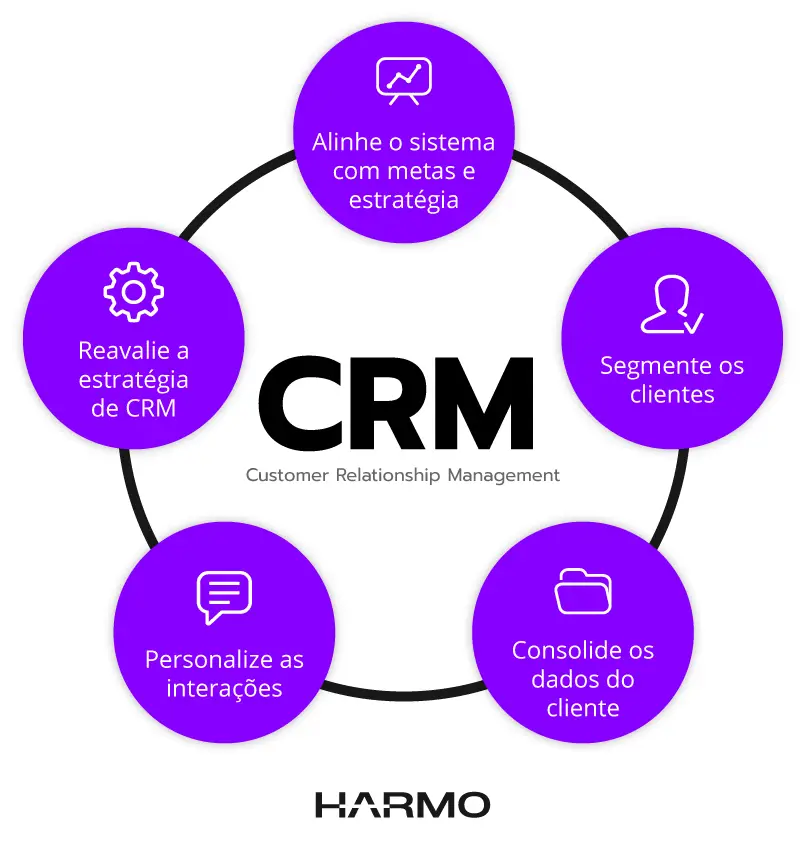
Have you ever thought about how a customer relationship management (CRM) system can transform the way you connect with your customers? Implementing an effective CRM can be an incredible journey involving four simple yet powerful steps.
Remember: this isn't just a matter of processes; it's an opportunity to cultivate a culture that values every interaction with the customer.
To create an environment where everyone feels valued and heard, it's essential that your marketing, customer service, and public relations teams come together to foster a culture of empathy and lasting connections.
Let's explore together the four steps that will lead you to successfully implementing a CRM:
1. Identify your customer
The first step is to connect with the essence of your customer. Ask yourself: “Who is this person? Where do they live? How do they prefer to communicate?” Knowing their needs, desires, and previous interactions with your company is fundamental.
Remember that every piece of information you gather is an opportunity to build a deeper relationship. Avoid repeating questions on different channels; instead, show that you genuinely care.
2. Differentiate wisely
With the data in hand, start differentiating your customers. Ask yourself: "Who are the ones who would benefit most from my product or service?" Classify your customers into two categories: those with the highest value and those with the highest potential.
Encourage customer participation by seeking suggestions and listening to their complaints. These interactions are valuable because they reveal insights that can shape your approach, allowing you to anticipate and effectively meet their needs.
3. Encourage interaction
Understanding your customers is just the beginning. Now, it's time to create an environment where they feel comfortable interacting with your company. How? By personalizing products and services and offering benefits that keep them engaged.
Use social media as a powerful tool to create meaningful connections. Share engaging content, irresistible promotions, and discounts that inspire your customers to interact.
4. Personalize the Experience
Now that you understand your customers' needs, personalize the experience you offer. Ask yourself: "How can I make each interaction unique and memorable for them?"
Establish a continuous feedback loop where your customers feel comfortable sharing their experiences. This will ensure you are always aligned with their expectations, offering exactly what they want at the right time. To achieve this, your team must be trained and willing to adapt their approach, maintaining the necessary flexibility and sensitivity.
Let's visualize this in practice? Imagine you bought a pair of shoes online, but upon receiving them, you realize they're not the right size. When you contact customer service, a friendly representative asks how they can help. After hearing your explanation, they record your information and generate a service request number.
With empathy, he explains the exchange policies and offers a quick and effective solution. Your satisfaction is recorded, and this information will be valuable for the company to better understand your profile as a consumer, as well as the efficiency of the service.
After the exchange, the company is concerned about how the customer's experience was. This shows how customer relationship management can be practiced effectively and humanely.
Implementing a CRM isn't just about processes; it's about creating a truly customer-centric buying journey where every interaction is an opportunity to build a meaningful and lasting relationship.
Conclusion
Using good customer relationship management software does not guarantee that a company will extract all of its potential benefits.
To obtain more than one CRM, companies must have a strategy for acquiring customer data, as well as for determining which data is most valuable and using that information effectively.
Implementing good customer relationship management in a company requires managers and employees to rethink traditional ways of doing business and be able to build a customer-centric culture.
Considering everything your current clients can do for you, there's simply no reason not to stay in regular contact with them.
Using a robust Customer Relationship Management platform allows the company to continuously monitor and improve customer satisfaction, fostering long-term relationships.
Use your imagination, and you'll come up with many other ideas that can help you develop a lasting relationship with your clientele.
Take this opportunity to also learn about Harmo – software for managing locations on Google Business Profiles, used in over 40,000 stores. It's the only solution on the market that proves an increase in customer traffic.